Pearls are arguably the oldest gem in history.

The trade of natural pearls predates that of diamonds, but cultured (whole) pearls only emerged a little of 100 years.

Beauty often comes first when valuing a pearl, but rarity, durability and sustainability are becoming increasingly important in pearl appreciation. Below is a summary of pearl types available in the market, along with references and links to resources we partnered with to support your learning about pearls.

We also recommend you dive with us in the Pearl Impacttm section of our website as we believe pearls nature positive potential is a key point of difference with other gem categories.

ONE Harvest

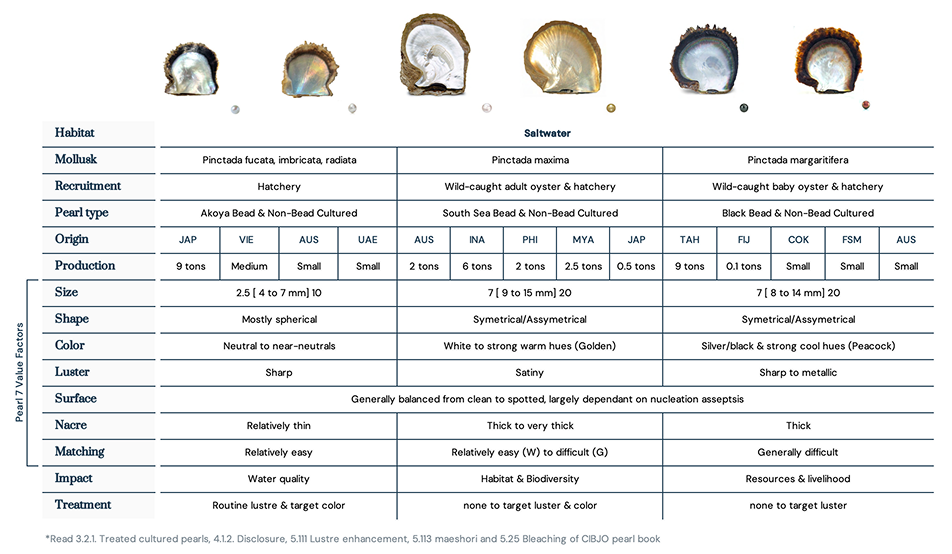
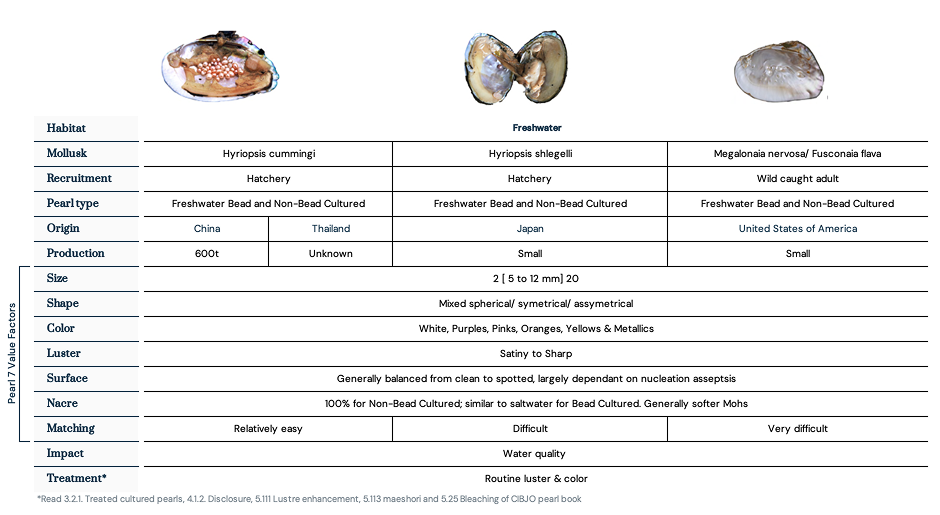
Cultured and natural pearls come from a wide diversity of molluscs and habitats. Pearl physical attributes -or value factors- always reflect the journey of the molluscs they grew within.

The tables below provide key points of difference between mollusc species and corresponding pearl types.

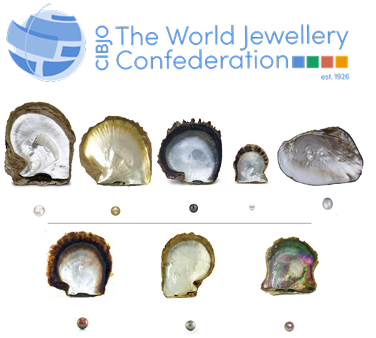
Credit @PierreFallourd, CIBJO Pearl guide

CIBJO Pearl guide

The World Jewellery Confederation (CIBJO) pearl guide provides general information on the many varieties of natural and cultured pearls; it further describes the important parameters by which the appearance of natural pearls from the Akoya species complex and cultured pearls produced with other of the “pearl oysters” as well as freshwater molluscs can be described and assessed.

CIBJO although provides a pearl blue book, which purpose is to define and provide references to pearl related nomenclature to support the sector.

Onegemme team actively contributes to CIBJO Working Groups, Committees, Commissions and Sectors. Working Groups, Committees and Commissions consider standards and guides for use in the jewellery supply chain. Sectors represent levels of trade in the jewellery industry. Sectors and commissions advise the Executive Committee on current trade practices and issues that affect the jewellery industry.

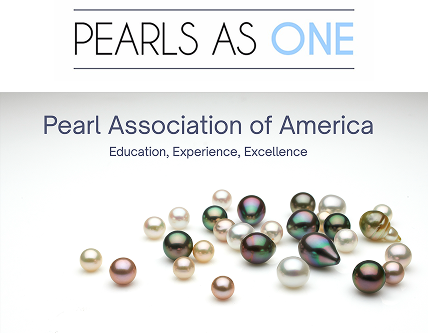
PAA Pearls as One

The Pearl Association of America, a not-for-profit organization, was established in 1957 as the Cultured Pearl Association of America with a focus on the promotion of cultured pearls in North America.

Alongside its recent name change, the Association is now dedicated to fostering a greater understanding of both cultured and natural pearls. It is doing this by offering Immersive Educational Experiences to both pearl enthusiasts and industry professionals. Membership in the Association will now be offering new benefits and activities, such as:

  • Access to Pearls as One Course
  • Access to Pearl Tours
  • Access to Pearl Talks
  • Access to a Certification Program

Pierre is currently vice-president of the Pearl Association of America and the team actively contributes to the course and related activities of The Pearl Association.
GIA Pearl course

Learn the product knowledge and grading skills to effectively buy inventory and build confidence when buying and selling akoya, South Sea, Tahitian and freshwater pearls. You will be taught GIA’s 7 Pearl Value Factors™: size, shape, colour, lustre, surface quality, nacre quality and matching – the essential criteria for assessing the value and beauty of pearls.
 
What you’ll learn:

  • Explain the differences between natural and cultured pearls
  • Evaluate and grade cultured pearls based on GIA’s 7 Pearl Value Factors™
  • Describe the components of the GIA Pearl Report(s)
  • Describe cultured pearl types and their sources
  • Identify “other” pearl types found in the marketplace
  • Describe common pearl treatments
  • Understand the relationship of beauty, value and quality
  • Learn the process of pearl culturing and marketing


Onegemme team actively collaborates with GIA on a joint effort to bridge pearls value factors and social and environmental best practices.